Need emergency tree removal services in Harrison?
Ready to compare options? Request an estimate or ask a question. A local provider in our network can follow up with the details of your tree job.
No obligation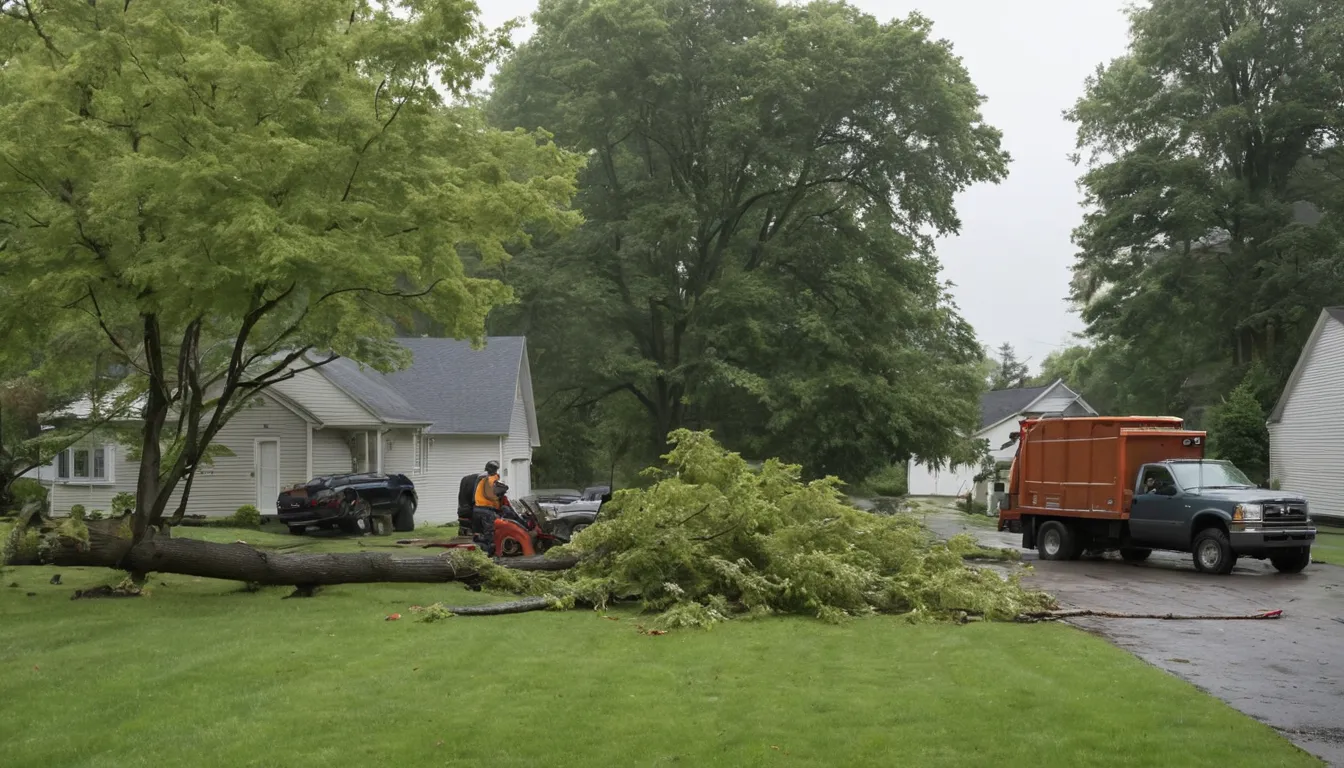
Request an estimate and compare
A lot of people think an emergency tree call means saying yes to the first truck that pulls up. In practice, you can move fast and still compare. Anglebenefits Tree Service is a referral service. We connect homeowners in the Harrison area with independent local providers who handle emergency tree removal, from limbs hanging over a roof to whole trees across a driveway.
The providers do the work. Anglebenefits Tree Service does not. Our job is to help you reach them, so you can ask plain questions, see a written estimate and choose at your own pace. There is no obligation. Request a callback to check provider availability, or send a request and let providers get back to you. Compare, then decide.
A tree on the ground looks finished. It often is not. Stay inside, or well back, until you know what is holding it up.
Keep clear of any wire near the tree. Treat every line as live, even if it looks dead. Contact your utility about downed lines. Keep kids and pets away from the area too.
Do not cut a tree that rests on a roof, a car or another tree. Wood under strain can snap back with no warning.
A lot of people think the risk ends when the tree lands. In practice, though, a fallen tree can shift, roll or spring loose when its weight changes. Split trunks and tangled limbs store a surprising amount of force.
A trained provider reads that force before the first cut. A chainsaw and a spare afternoon are a poor match for that job.
These situations need quick attention:
Not every storm leftover is an emergency. A small tree in the back yard, scattered branches on the lawn or a snapped limb far from the house can often wait. Providers tend to book those after the urgent jobs. A short wait also gives you room to compare estimates.
Not sure which group your tree falls into? Request a callback to check provider availability and describe what you see.
Storm tree clearance follows a simple order. The provider looks over the site and spots hazards such as lines, weak roofs and leaning neighbors. Next, they secure the area. Then they cut the tree into pieces, often from the top down, and lower or lift each one. Last, they clear the pieces from your yard.
Sometimes the need comes before the fall. A tree that is clearly failing can be taken down in controlled sections before it lands on the house. That is a tree falling service in the plainest sense, and it is a lot calmer than cleanup after the fact.
It sounds reasonable. In practice, a tree on a house often needs rigging, ropes or even a crane. Pulling the wrong piece can punch through a roof or crack a beam.
Ask the provider how they plan to lift the tree and protect the structure. A clear answer is a good sign.
Many people believe they must accept the first offer. You do not. Even after a storm, you can ask two or three providers for estimates and see how they differ.
Be careful with anyone who knocks on your door after a storm and asks for payment up front. A fair provider can give you a written quote, a clear scope of work and proof of insurance. Ask before you commit.
Some policies may cover sudden damage from a fallen tree, especially when it hits a structure. Rules differ a lot, so check your policy and ask your insurer what applies to you.
Providers can often help document damage for a claim. That can mean photos, a written description of the work and an itemized invoice. Take your own photos before anything is moved, too.
Expect busy schedules. Many providers can respond quickly to the most serious cases, but demand jumps when a storm hits a whole area.
Expect triage. Trees on homes and blocked exits come first. Yards and fences come later.
Expect noise, heavy equipment and some mess on the lawn. Hauling away the wood and brush may be priced on its own, so ask.
Our weather is hard on trees. Cold winters with deep frost leave roots stiff, and heavy ice or wet snow loads branches until they crack. Hot, humid summers bring severe thunderstorms and hail that strip limbs in minutes. Spring flooding soaks the ground, so roots lose their grip and trees can topple in only a moderate wind.
There is a basement angle too. If a fallen tree takes down power, a sump pump may stop. Ask a pro about a backup before storm season.
A common belief is that a tree that looks healthy is safe. Not always. Watch for dead branches, cracks in the trunk, mushrooms at the base, a new lean and hollow spots.
Older frame houses, bungalows and ranch homes often sit close to mature trees. A provider can look at those trees before storm season and tell you which ones carry risk. Removing a weak tree on your schedule usually beats removing it from your roof.
You do not need to rush into a decision. You only need a few facts and a couple of estimates. Request a callback to check provider availability in your area.
Providers cut and clear trees that have come down on lawns, driveways and fences.
Careful rigging and lifting for trees resting on roofs, garages, sheds and parked cars.
Broken limbs, split trunks and storm debris cleared so you can use your property again.
Dangerous leaning trees and hanging limbs taken down in controlled sections.
Prices vary a lot with tree size, access and damage. These are typical U.S. ranges only. Always get a written quote before work starts.
| Job | Typical range | Notes |
|---|---|---|
| Hanging limb removal | $200 – $800 | Depends on height and weight |
| Small fallen tree in yard | $400 – $1,200 | Easy access keeps the price down |
| Large fallen tree in yard | $1,000 – $3,000 | Size and trunk width matter |
| Tree on roof, fence or garage | $1,500 – $5,000+ | Extra rigging and care needed |
| Crane-assisted removal | $1,000 – $3,000 added | Used when hand work is unsafe |
| Debris and wood haul-away | $100 – $500 | Sometimes priced separately |
Stay back from the tree and lines, and take your own photos if it is safe.
Request a callback or send a request describing the tree and damage.
Look at written quotes, scope, equipment and insurance details side by side.
Pick a provider, confirm the plan and let them clear the tree.
Request an estimate, see how providers differ and choose without pressure or obligation.
Independent providers who know area weather, soil and housing styles.
Clear steps and straight talk about what the job needs.
You set the pace and pick the provider that fits.
Ready to compare options? Request an estimate or ask a question. A local provider in our network can follow up with the details of your tree job.
No obligationEmergency tree removal covers trees that threaten people or property: a tree on a house, a blocked exit, a leaning tree with lifted roots or a cracked limb hanging over a roof.
It is safer not to. Fallen trees can hold tension, hide power lines and shift without warning. Stay clear, keep others away and ask a local provider to assess the tree before anyone cuts.
Some policies may cover sudden damage, especially when a tree hits a structure, but rules vary widely. Check your policy and ask your insurer. Providers can often help document the damage for a claim.
Ready to compare options? Request an estimate or ask a question. A local provider in our network can follow up with the details of your tree job.
No obligation